
OPEN 7 DAYS
300+ 5
Reviews
LOW PRICES


CALL US NOW ON :
A scattering of blossoms can look harmless until rain presses it into a layer along your roof edge. Airborne seed fluff creates a different challenge: it can travel beyond your garden, catch on gutter mesh and hold other small particles. If you are considering gutter protection, understand what happens to this material after it reaches the roof, not just whether a guard can catch it.
For homes around Hobart, the right solution depends on the type of debris, the mesh design and how water reaches the gutter. Gutter Protection Solutions can help homeowners assess these factors when comparing options. Understanding how petals and seed fluff behave, why smaller mesh openings are not always better and what to look for when debris accumulates can help you decide.
Gutter mesh can intercept blossom and seed fluff, but it will not necessarily exclude every fragment. Larger petals may remain above the guard, while smaller pieces and fine fibres can pass through openings or become lodged within them.
This distinction matters because debris inside the gutter and debris covering the mesh can affect drainage in different ways. A guard may keep much of the visible material outside the gutter but still require attention if a persistent surface layer interferes with water entry.
Leaves and twigs tend to be relatively bulky, while blossom and seed fluff are lighter, more flexible and easier for wind to carry. Depending on nearby vegetation and wind conditions, your roof may collect seasonal debris even when there is no overhanging tree directly above it.
The material reaching your gutter may also differ from what you see on the ground. Wind can concentrate light debris against roof features or along sheltered edges. Rain then washes material from a broader roof area towards a smaller section of mesh, creating a local build-up rather than an even covering.
Shape matters as much as apparent size. A petal wider than a mesh opening may fold, tear or break down into smaller pieces. Fluff can stretch across several openings while individual fibres slip through. Describing a guard as suitable for leaves therefore does not necessarily indicate how it will handle blossom or fine seasonal debris.
Also, distinguish seed fluff from pollen. Visible fluffy material may contain fine fibres and attached seeds, whereas pollen particles are much smaller. A mesh system designed to reduce gutter debris should not be treated as a pollen filter.
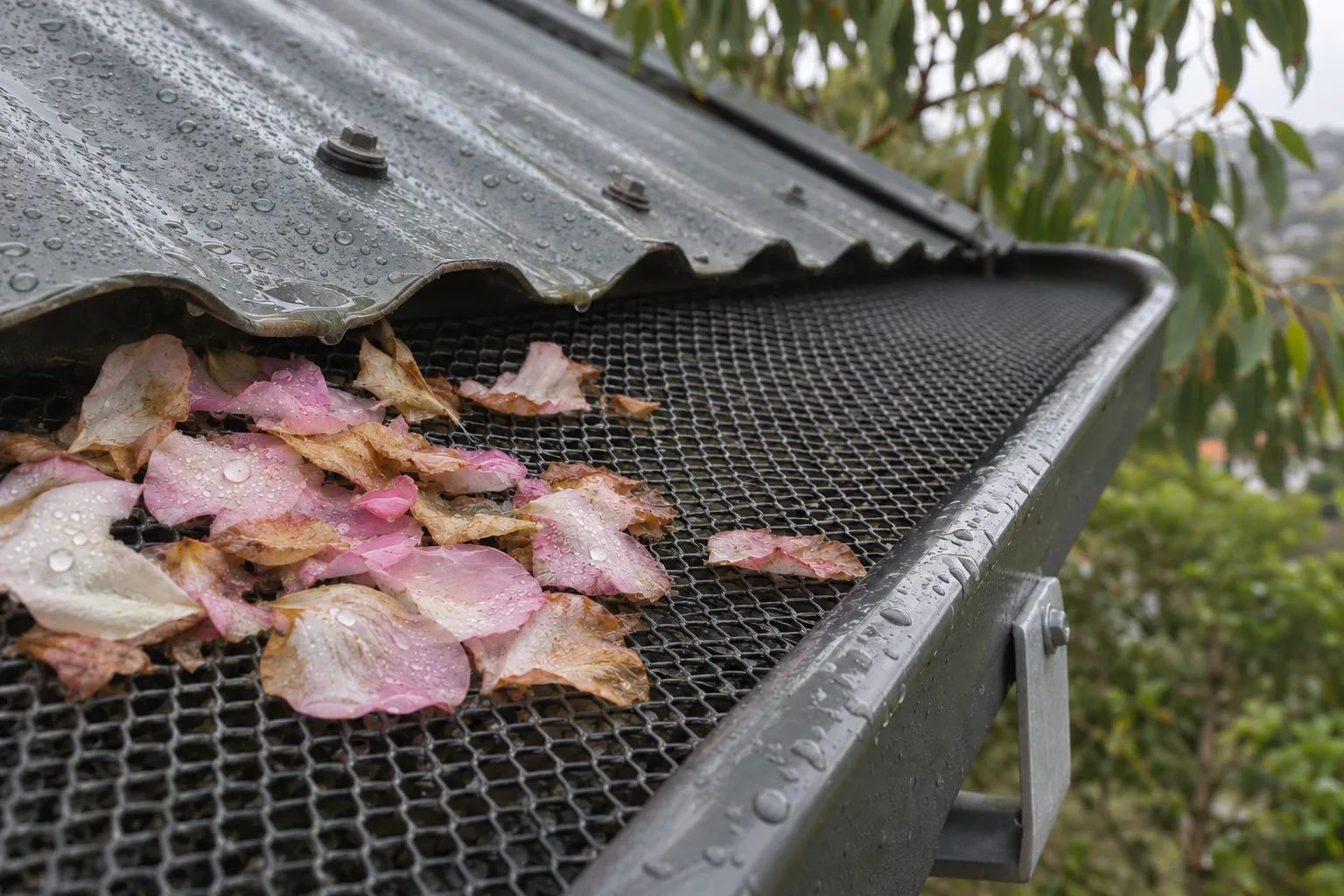
Dry, loose material may move away in a breeze, particularly on an exposed roof edge. Once wet, however, petals can flatten against the mesh and overlap. Fluff can become tangled with petal fragments, dust and other small debris, making the covering less likely to shift easily.
Whether this material moves depends on the roof's exposure, the guard's surface and how much debris has accumulated. Sheltered sections may retain a layer after more exposed areas have cleared.
The important consideration is not simply whether debris is visible but whether it remains long enough to interfere with water entry. Scattered material may have little practical effect, while a dense, wet covering deserves closer assessment. Observing the roof edge during both dry weather and rainfall can reveal more about its performance than a single photograph.
Choose mesh by considering the material reaching your roof and how the installed system will admit water. Opening size is relevant, but it cannot tell you how a guard will perform once petals and fluff begin covering its surface.
When comparing suppliers, ask for a recommendation based on your roof conditions rather than a general promise to stop all debris. A proper assessment should explain what the proposed product is likely to exclude, what may still accumulate and how the system is expected to handle rainfall.
Smaller openings may exclude more fine material than larger ones, depending on the debris's shape and flexibility. However, this does not automatically make the smallest available opening the best choice. Material kept outside the gutter still needs somewhere to go, and fine fibres can lodge across openings instead of passing through them.
The mesh's construction also influences drainage. The proportion of open area, material type and surface design all affect how water interacts with the guard. Fine debris may accumulate across the surface and reduce the available area for water entry, particularly when wet petals and fibres overlap.
A clean mesh sample cannot demonstrate how the product will perform under a persistent covering of seasonal debris. Equally, larger openings are not automatically trouble-free if smaller material passes through and accumulates inside the gutter.
If you are comparing fine-mesh options, this explanation of micro mesh on Tasmanian homes provides further context. Ask suppliers how their proposed products handle your particular type of seasonal debris and what limitations you should expect.
Roof pitch influences how water and loose material approach the gutter edge. The amount of roof draining towards a particular section also matters, as concentrated water flow interacts with the mesh differently from a light, evenly distributed trickle.
Surface debris can change this interaction by covering openings or redirecting water across the guard. The mesh's angle, positioning and fit also influence how effectively water reaches the gutter rather than flowing over the edge.
Installation quality is therefore just as important as product selection. An installer should assess how the mesh meets the roof and gutter, whether there are areas where fine material could gather and how the system can be accessed for future professional maintenance. These gutter guard installation considerations help explain why product selection and installation should be considered together.
For enquiries about a gutter guard in Hobart, ask professionals to assess the debris you have observed alongside your roof's pitch, exposure and existing gutter condition. Ground-level photographs taken during the problem period can make the discussion more specific.
A visible patch of fluff does not, by itself, establish that the gutter is blocked or the mesh is unsuitable. What matters is how long the material remains, how it changes after rain and whether you notice water escaping over the gutter edge.
You can gather useful information safely from ground level without trying to reach the mesh. If the build-up persists or overflow occurs, arrange a professional assessment rather than attempting roof access or clearing the surface yourself.
WorkSafe Tasmania explains the risks associated with working at height, reinforcing the importance of suitable safety measures when professionals access roofs and gutters.

Start with what you can actually see. Is the material loose and fluffy, a thin scattering of petals or a darker, flattened layer? Does it appear across the entire visible edge or collect in one particular area? You do not need to identify the plant to provide a useful description.
Note when the problem appears and how long it lasts. A short burst during flowering or seed release is different from material that remains well after the seasonal drop has finished. If seed fluff on gutter mesh clears during dry weather but returns after each windy day, mention that pattern to the installer.
Rain provides another useful comparison. From a safe ground-level position, observe whether the material becomes a persistent mat and whether water spills over near the same area. Avoid standing beneath overflowing gutters to inspect them. Taking photographs from a consistent viewpoint can help show changes without requiring you to get closer.
Arrange an inspection if the layer stays in place through changing weather, repeatedly forms in the same spot or coincides with overflow. A professional can assess the surface covering, the guard's fit and the condition of the gutter beneath it. Persistent problems should not automatically be attributed to mesh opening size alone.
Where cleaning or repairs are needed, use a qualified professional, including licensed tradespeople for any work requiring a licence. Ask how the proposed system can be maintained safely and what signs should prompt another inspection. This information on ongoing gutter guard maintenance can help you frame those questions without assuming every property needs the same maintenance schedule.
If your gutters collect rainwater for a tank, keep debris exclusion separate from water quality. Mesh is not a pollen filter and does not guarantee clean tank water. NSW Health’s guidance on managing rainwater tanks for safe drinking water explains how roof debris and first-flush devices affect the collection system. Questions about tank-water suitability require an assessment of the wider collection and treatment system, not reassurance based solely on how clear the mesh looks.
Petals and seed fluff can create different challenges from leaves and larger garden debris when wet material accumulates across gutter mesh. Choosing an appropriate system means considering more than opening size. Mesh construction, roof pitch, water flow and installation quality all influence how effectively the guard performs.
Gutter Protection Solutions can assess your existing gutter conditions and compare suitable protection options. By identifying the type of debris reaching your roof and understanding the limitations of different mesh designs, you can make decisions about protecting your gutters while keeping future maintenance manageable.
