
OPEN 7 DAYS
300+ 5
Reviews
LOW PRICES
.webp)

CALL US NOW ON :
Homes in Tasmania face a unique mix of weather and fine debris that can quickly turn clean gutters into a costly problem. That’s why gutter guards in Tasmania are becoming an increasingly popular solution for homeowners trying to reduce blockages and prevent water damage. From heavy rainfall and cold snaps to windblown eucalyptus leaves and pine needles, these conditions frequently lead to gutter overflow and even damage to roofs and foundations. Gutter Protection Solutions regularly sees homeowners dealing with repeated cleaning, premature gutter corrosion and preventable leaks, which has driven growing interest in more effective micro-mesh systems across the state.
This article by Gutter Protection Solutions examines how micro-mesh gutter guards actually work, what sets them apart from more basic gutter covers, and where they perform best. Property owners will learn the key advantages, including reduced cleaning and improved protection against fine debris, along with the potential drawbacks such as upfront cost, installation requirements and ongoing maintenance considerations. After reading this guide, homeowners will have a clear understanding of the real-world pros and cons of micro-mesh systems and when this type of protection is genuinely worth the investment for their property.

Tasmanian homes face gutter issues more frequently than many mainland properties because of local weather patterns and vegetation. Homeowners routinely deal with blocked or overflowing gutters and premature gutter corrosion that can affect roofs and even internal ceilings. Understanding why problems occur so often helps explain why a more effective form of gutter protection is worth considering.
Expert installers regularly see the same combination of factors across the North-west and rural areas. Cool and wet conditions combined with dense tree cover and older housing stock create a perfect storm for gutter blockages and water damage if gutters are not well protected.
Cool temperate climate means regular rainfall across much of the year rather than just short wet seasons. Gutters are expected to handle:
When gutters are even partially blocked by leaf litter, the constant moisture quickly leads to overflowing. Water can then run behind fascias into eaves or over pathways, causing slippery surfaces and gradual structural damage.
Cooler temperatures also mean gutters often stay damp for long periods. Moist organic matter in the gutters never fully dries out, which accelerates rust in metal gutters and encourages moss growth. Once moss takes hold, it acts like a sponge to keep gutters wet and trap even more debris.
The area has extensive tree cover in both urban and rural settings. Suburbs with mature eucalypts and native shrubs are very common. These trees drop:
Unlike larger leaves that are easier to scoop out, the fine material from many trees in the area packs tightly into gutter corners and downpipe inlets. Winds common in coastal and hill areas blow this debris onto roofs even if a tree is not directly over the house.
In autumn deciduous trees in older suburbs shed large volumes of leaves over a short period. Gutters can go from clear to completely choked after a single windy weekend. Rural homes near bushland also see seasonal bursts of bark and twig fall that quickly overwhelm unprotected gutters.
Many homes in this locale were built decades ago and still have original or older-style gutters. These systems often have:
Older gutters clog more easily and have less capacity to cope with heavy rain. Once rust starts from constant damp debris, it can quickly progress to pinholes and leaks along the gutter run.
Coastal and riverside properties face extra pressure from salt‑laden air. Salt combined with permanently damp leaf matter accelerates corrosion in steel gutters. In these environments even relatively new gutters can deteriorate quickly if they are frequently blocked and holding water rather than draining freely.
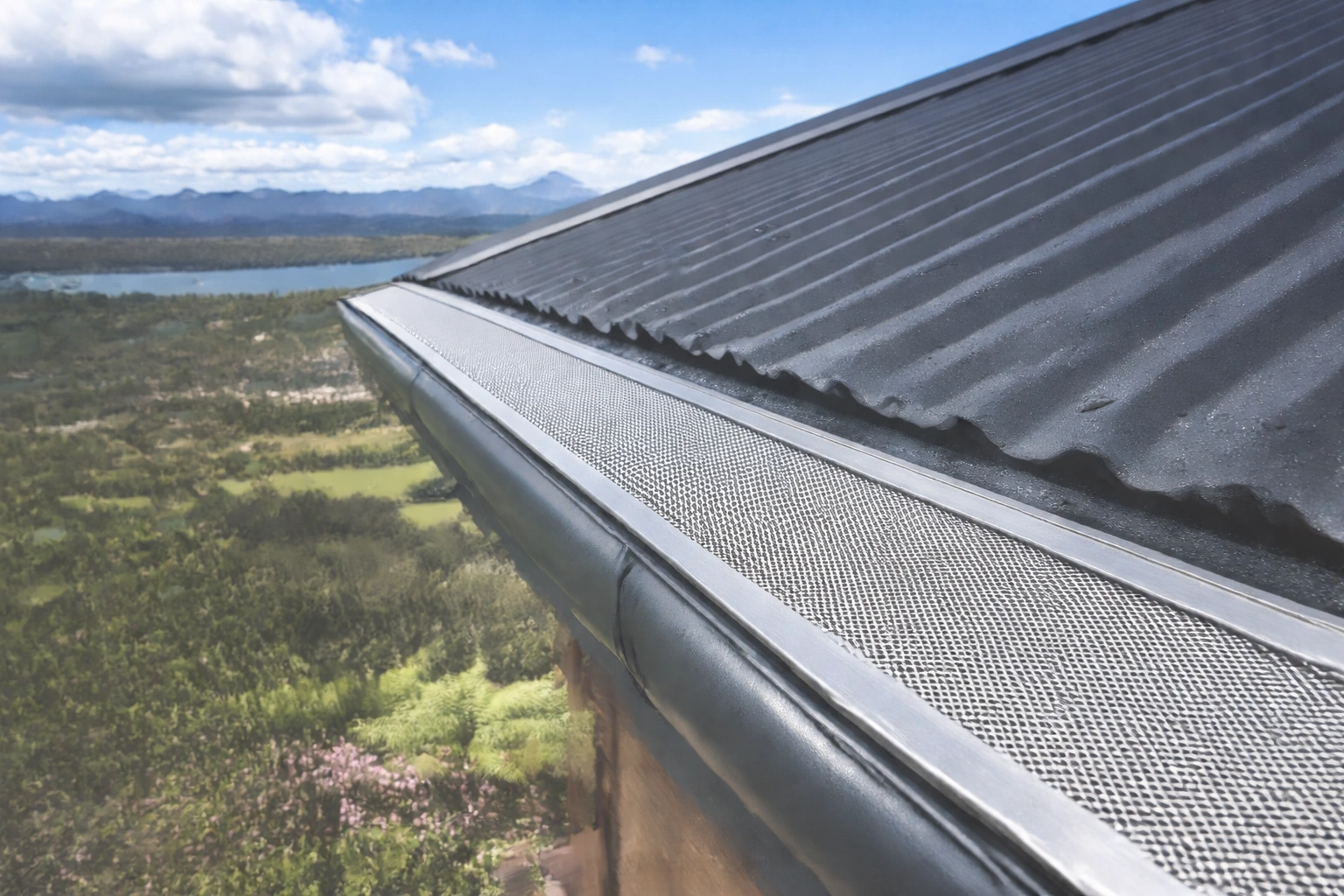
Micro-mesh guards sit over existing gutters and act like a fine filter that lets water in but keeps almost everything else out. For homes that deal with gum leaves or pine needles and moss growth, this type of guard is designed to stop blockages before they start rather than simply trapping debris inside the gutter.
Professionals install micro-mesh systems that are fixed permanently to the roof edge so the roof and gutter work together as one surface. Water is directed cleanly into the gutter, while leaves and other material are carried off the edge by gravity and wind.
A micro-mesh guard uses a very fine perforated surface (usually stainless steel or aluminium) mounted on a rigid frame. The openings are small enough to block most wind-blown debris, which is especially useful around eucalypts and pines.
The frame is shaped to match the gutter profile and the roof pitch. When fitted correctly, the mesh forms a continuous sloping plane from the roof down to the gutter lip. This slope is critical because it prevents leaves from sitting flat and decomposing on top of the guard, which is a common problem with cheaper flat inserts.
Micro-mesh guards rely on surface tension and capillary action. When rain hits the mesh, the water clings to the metal surface and follows it downward. As it reaches the gutter edge, it rolls through the tiny openings into the gutter channel below. Even in typical downpours, the combination of thousands of small holes provides enough capacity for high flow.
Larger debris such as twigs and bird nesting material cannot pass through the mesh, so it stays on top. Because the guard is sloped, this material is usually pushed towards the edge of the roof by ongoing rainfall then removed by wind. Fine dust and pollen that might pass through are usually flushed out through the downpipes during heavy rain instead of clumping and causing blockages.
Secure fixing is essential in homes due to coastal winds and frequent wet periods. Expert installers typically:
This creates a strong cage over the gutter that resists wind uplift and prevents birds or possums from entering the roof cavity. The installed guard can be colour-matched to Colorbond and common roof materials so it blends with the roofline while still allowing for thermal movement in hot and cold conditions.
With the system in place, the gutter works as a protected water channel instead of a catch-all for debris. This is especially beneficial for homes that rely on rainwater tanks or stand close to bushland.
This section looks at how micro-mesh gutter guards actually perform, not just in theory. Homeowners want to know if they will really cut down on cleaning while protecting roofs and be worth the cost in the cool, often wet climate.
Professionals install and service these systems, so they see first-hand where micro-mesh products excel and where they can struggle. Understanding both sides helps customers choose the right solution for their roof and budget.
The biggest advantage of micro-mesh is its ability to block very fine debris. In many parts of Tasmania homes sit under stringybarks and other natives that shed small leaves and fine twigs. Traditional mesh or brush-style guards often let these finer particles into the gutter. A quality micro-mesh with a tight aperture will keep most of this material out, so gutters are far less likely to clog between seasonal clean-ups.
Micro-mesh systems also suit frequent rain. By keeping gutters clear, they help reduce overflow that can lead to fascia damage or damp walls and water pooling near foundations. For homes that harvest rainwater, a well-designed micro-mesh guard helps maintain better water quality because it screens out organic debris that breaks down in tanks.
Fire considerations matter in many parts of the state. Fine leaf litter and embers can build up in unprotected gutters. A metal micro-mesh system installed to suit bushfire guidelines can help reduce the amount of combustible material in the gutter and limit ember entry under the roof edge.
From a day-to-day perspective micro-mesh guards can significantly cut down the need for homeowners to climb ladders. Gutters may still need periodic inspections, but for many properties the frequency and difficulty of cleaning are reduced. This is especially valuable for older homeowners.
Micro-mesh systems are usually more expensive than basic mesh or foam inserts. The material itself (along with correct fixing and flashing details) adds to the upfront cost. For some smaller homes with minimal tree cover, it may take a long time for the maintenance savings to balance the initial investment.
Fine mesh can also clog at the surface. In areas with heavy pollen, the top of the mesh can form a film that slows water entry. In areas where lichen and moss are common, shaded roofs can see growth on the mesh over time. When this happens, gutters may not be blocked but water can sheet over the edge during heavy rain. This means the system still needs periodic brushing or hosing.
Not every roof is ideal for micro-mesh. Very low-pitch roofs or complex valley and box gutter designs require careful assessment. On some older roofs the additional fixings or required capping can be tricky without minor roofing repairs.
Micro-mesh guards are often marketed as maintenance-free, yet they are better described as low maintenance. Gutters typically stay much cleaner inside, but the outer surface of the mesh will still collect debris that needs attention.
Homeowners should expect to:
For many properties this maintenance can be carried out safely from the ground with extendable tools or handled by a professional. Reputable installers usually recommends including the guard system in routine roof and gutter check-ups so any issues with fixings or corrosion or blockages can be picked up early.
Micro-mesh guards are not essential for every roof, but there are clear situations where they deliver strong value. They are most worthwhile when a property faces regular leaf and debris fall or when fire safety and water harvesting quality are priorities. In these cases the higher upfront cost can be offset by lower maintenance and less risk of water damage.
For homes with complex roofs or limited access or older gutters, micro-mesh systems can be a practical way to protect both the roof drainage and the building structure. The key is to consider local conditions on the specific property rather than treating gutter protection as a one-size-fits-all upgrade.
Micro-mesh guards are particularly worth it where trees sit close to the roofline. Eucalypts and pines drop fine leaves or needles and husks that slide through cheaper mesh or plastic inserts. Over time this material breaks down into sludge that blocks outlets and downpipes.
On properties in bushy suburbs or the Tamar Valley, a quality micro-mesh can drastically cut gutter cleaning frequency. It is especially effective where:
In these settings homeowners typically see fewer overflow issues during heavy rain and less need for risky ladder work.
For homes in or near bushfire-prone areas, micro-mesh guards can be worth the investment primarily for ember control. During a bushfire embers can travel well ahead of the fire front and land in dry leaf build-up inside open gutters. A correctly specified metal micro-mesh with fire-rated properties helps prevent embers from lodging in the gutter and igniting debris.
This is especially relevant for homes:
In these locations a compliant metal micro-mesh system installed to meet relevant building and fire guidelines can form part of a broader bushfire preparation plan. It will not replace other measures, but it can reduce one of the common ignition points around the roofline.
For properties that rely on rainwater tanks, micro-mesh guards are often worth it simply for the water quality improvement. Fine mesh stops most leaf fragments and roof litter from entering the gutter, which reduces organic contamination entering the tank.
On rural homes and shacks that use tank water for household supply, this can mean:
When combined with first flush diverters and sound roof plumbing, a well-installed micro-mesh system can help maintain cleaner harvested water. This is particularly valuable where mains water is not available.
In the end, whether micro-mesh gutter guards are worth it for a Tasmanian home comes down to matching the product to the conditions on your roof and in your yard. The climate (with its heavy winter rain and moss growth) and mix of eucalypt leaves and pine needles, is especially hard on unprotected gutters. That’s exactly the environment where micro-mesh systems are designed to perform: a fine, durable barrier that sheds water efficiently while keeping out most of the debris that typically blocks gutters and accelerates rust.
Micro-mesh guards offer real benefits in reduced cleaning and better water flow, but they’re not perfect. They can be more expensive up front and need correct installation to avoid overshooting or sagging while requiring periodic inspection and light maintenance. They make the most sense for homeowners with persistent clogging issues or mature trees close to the roofline, and even those wanting to protect a long-term investment in their home. If the guard is properly specified for your roof and professionally installed with a solid warranty and aftercare, a quality micro-mesh system is usually not just “worth it” in Tasmania asit becomes a key part of a long-term roof protection strategy.
