
OPEN 7 DAYS
300+ 5
Reviews
LOW PRICES


CALL US NOW ON :
Snow sitting along your roof edge can make a familiar gutter system behave in unfamiliar ways. A screen that normally keeps leaves out may become covered by snow or ice, while melting snow still needs a clear route into gutters and downpipes. For homeowners in snow-affected parts of Tasmania, these conditions can affect drainage and create additional roof maintenance concerns.
Choosing suitable gutter protection means understanding what different products are designed to do and where their limitations lie. Gutter Protection Solutions will explore gutter protection options but distinguish debris control from equipment designed to manage snow movement. Knowing how freezing conditions affect roof drainage also helps you recognise when professional assessment is needed and avoid unsafe attempts to clear ice yourself.
Gutter protection and snow retention address two separate problems. Gutter protection is designed to reduce the amount of leaves and other debris entering your gutters. Purpose-designed snow-retention systems, on the other hand, help manage the movement of accumulated snow across a roof, subject to the roof's design and an appropriate assessment.
This distinction is important for properties that experience recurring snowfall or freezing conditions. A gutter screen should never be assumed to provide structural support or prevent snow from sliding towards the roof edge.
Snow behaves differently from ordinary garden debris. It can accumulate across a large roof area, become heavier as temperatures fluctuate and move towards the eaves as a mass. Gutter protection is not designed to control these forces.
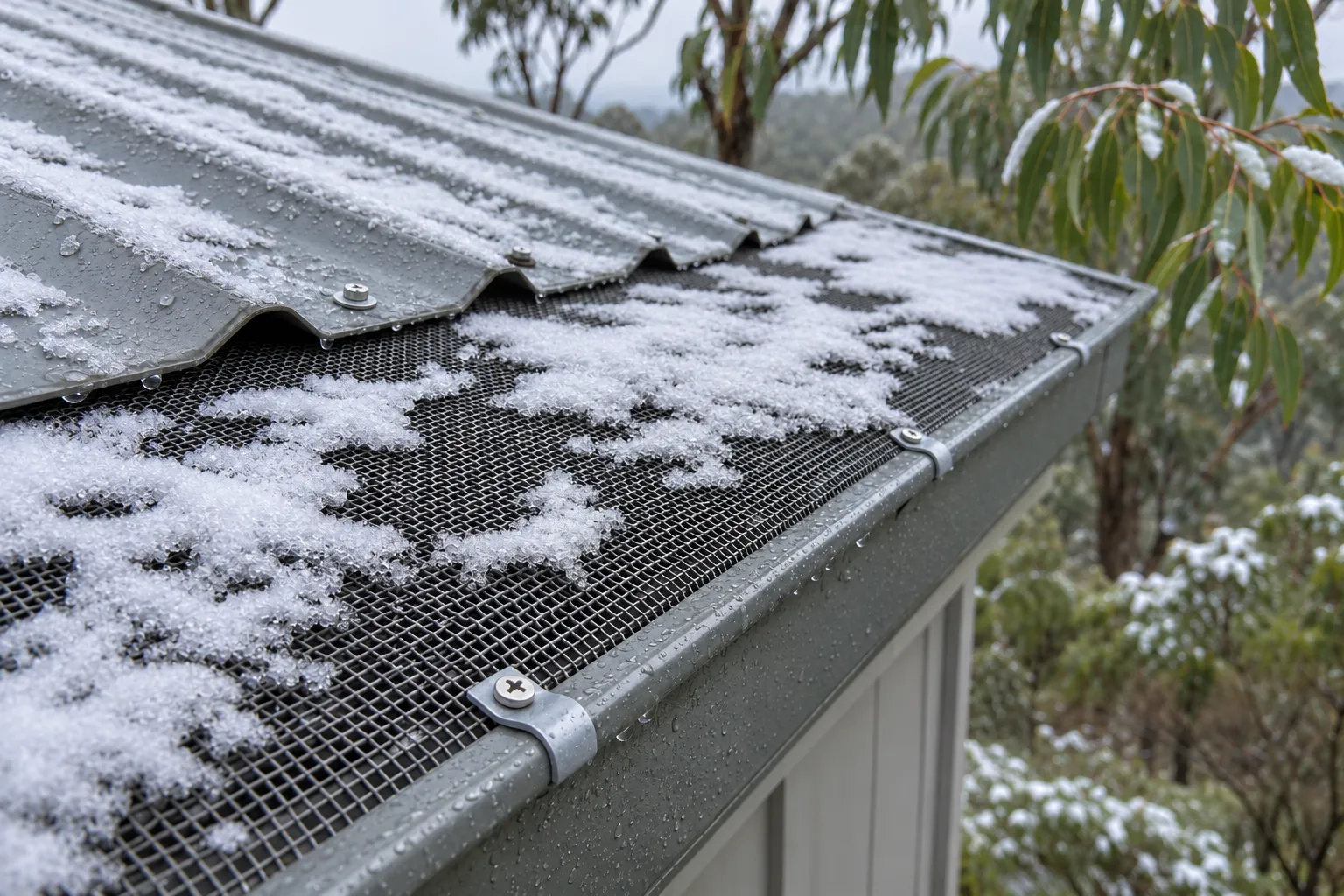
Even a securely attached screen forms only one part of a larger roof-edge assembly that includes fixings, gutters and supporting components. Its presence does not establish whether the assembly can withstand snow or ice loads. It also provides no guarantee that accumulated snow will remain safely in place.
When comparing gutter guard Tasmania options, separate questions about debris exclusion from concerns about snow movement. Ask suppliers what their products are designed to achieve, whether they have documented limitations in freezing conditions and what installation requirements apply.
Roof design plays an important role in how snow and meltwater affect guttering. Pitch, surface materials, valleys, changes in roof height and gutter positioning can influence where snow accumulates and how water travels towards drainage outlets.
Conditions can also vary across Tasmania. Properties in higher-elevation or more exposed locations may experience different combinations of snowfall, frost and freezing temperatures from homes in milder coastal areas. Shaded roof sections can remain frozen even when exposed surfaces have started warming.
A suitable assessment should consider the complete roof-edge arrangement rather than focusing exclusively on the proposed screen. Existing gutter condition, attachment points and drainage routes all deserve attention.
The article on choosing protection for roof valleys and difficult roof areas explains why roof geometry matters when selecting a suitable gutter protection system.
Before requesting a quotation, provide the supplier with information about previous snowfall, recurring ice formation and any known roof-edge damage. Know whether the assessment includes these areas and whether any concerns need to be referred to another qualified professional before installation.
A temperature change does not necessarily mean your gutter system will immediately return to normal operation. Snow may begin melting across an exposed roof surface while shaded sections and roof edges remain frozen. Water can then reach a gutter or outlet that is still restricted by ice.
The drainage process depends on temperatures across the roof, not simply whether the air feels warmer at ground level. Gutter protection cannot guarantee water flow if ice is blocking the screen, gutter channel or downpipe outlet. The Building and Plumbing Commission explains how snow and ice can affect gutter overflow measures, reducing their effectiveness when water needs to escape.
Sunlight and changing temperatures can cause uneven snowmelt. An exposed roof surface may release water while a shaded eave remains cold. When meltwater reaches that colder section, it may encounter existing ice or freeze again, interrupting its normal route into the gutter.
Roof layout can make this problem more noticeable. A valley may direct runoff towards one particular gutter section, concentrating water in an area where snow or ice is still present. Ice can also remain along roof edges after nearby surfaces appear clear.
These conditions can make it difficult to identify the source of a drainage problem from ground level. A restriction may involve the screen, the gutter itself or a downpipe farther along the system.
Pay attention to when the problem occurs. Water overflow during active snowfall may have a different cause from drainage issues that develop during a daytime thaw or overnight refreezing. Sharing these observations with a professional can help narrow down the likely source without requiring you to approach the affected roof area.
Leaves and ice can both restrict drainage, but they behave differently. Debris may remain trapped until it is removed or displaced, while ice can change as temperatures rise and fall. An opening that appears frozen in the morning may become clear later in the day.
Both problems can also occur together. Fine debris may remain beneath a layer of ice, meaning improved drainage during a thaw does not necessarily indicate that the system is completely clear.
Gutter protection helps reduce debris entering the drainage system, but it does not eliminate the need for periodic inspection and maintenance. Fine organic material and other particles may still collect depending on the product design and surrounding conditions.
The advice in this gutter guard maintenance guide explains why ongoing maintenance remains important after installation.
For snow-related drainage concerns, the screen, gutters, outlets and downpipes should be considered as one connected system. Once conditions allow safe access, a professional inspection can identify remaining debris, damaged components or drainage defects. Photographs taken safely during the event may also help explain temporary conditions that are no longer visible after the thaw.
A frozen gutter edge is not an ordinary cleaning task. Snow and ice can conceal damaged components, create slippery surfaces and fall without warning. Attempting to restore drainage yourself can expose you to falling materials or a serious fall while potentially damaging the roof-edge assembly.
Keep clear of areas beneath hanging ice or accumulated snow that could slide from the roof. If you notice drainage problems, loose components or water entering your home, seek professional advice rather than approaching the affected area to investigate.
Do not climb onto the roof or use a ladder to reach frozen guttering. A surface that appears clear from below may still be slippery, and guttering or protective screens should never be treated as handholds or supports. WorkSafe Tasmania outlines the risks of working at height, including roof work and tasks carried out on slippery surfaces.
Striking ice can transfer force into screens, fixings and gutter brackets. Pulling at frozen sections may also disturb components whose condition is hidden beneath the ice. Applying heat is not a safe alternative, as it can damage materials and change where meltwater travels or refreezes.
Avoid improvised removal methods and chemical treatments. The response depends on the amount of accumulated ice, the roof arrangement and the condition of the components beneath it. These factors require a proper assessment rather than guesswork.
If an entrance or pathway is located beneath the affected roof edge, use another route where safely available and keep other people away. Any photographs or observations should be made from a position clear of potential falling snow, ice or loose materials.
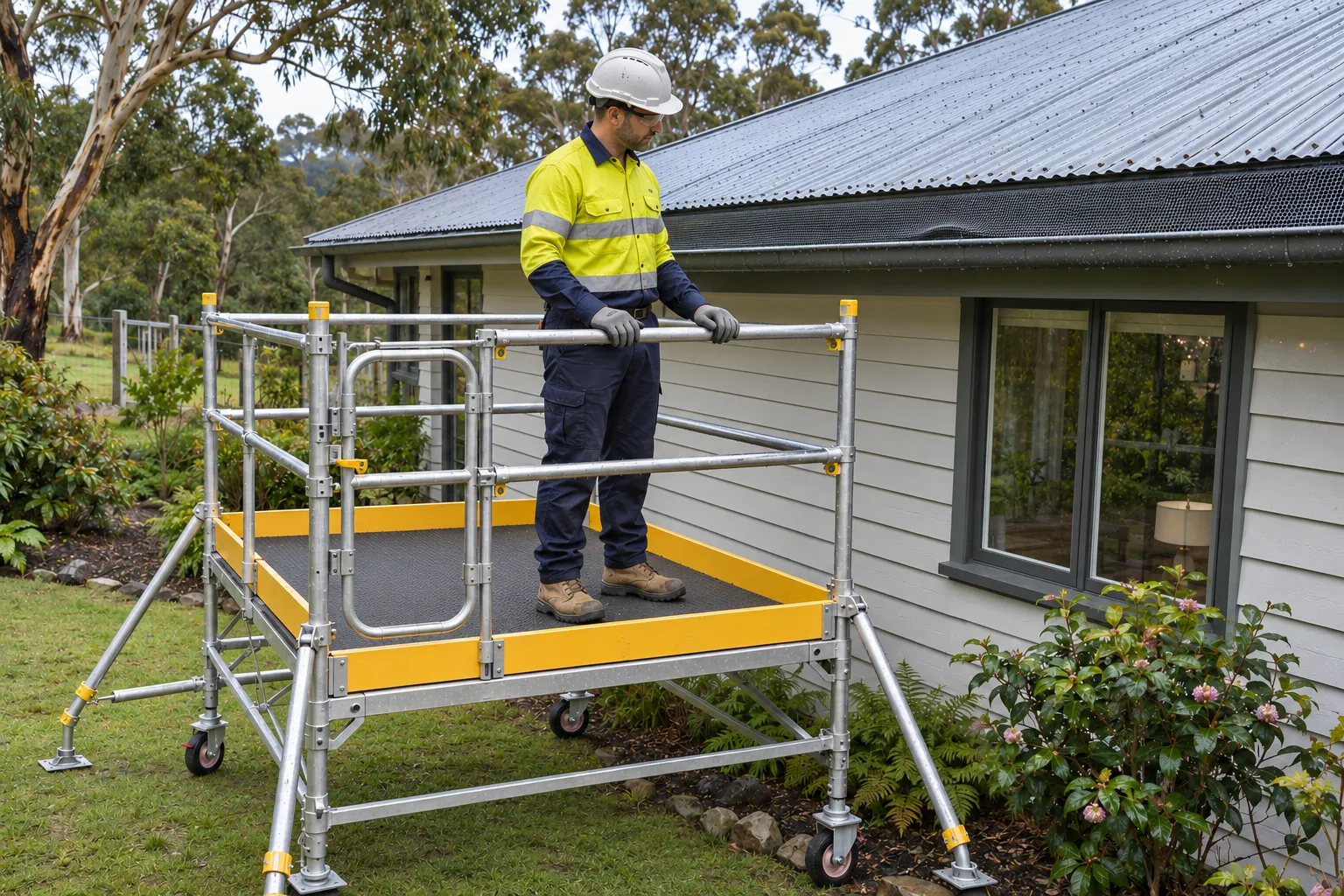
Sagging gutters, distorted screens, loose fixings or sections pulling away from the roof edge warrant professional attention. These signs do not establish the exact cause, but they indicate that the affected components should be inspected before further damage occurs.
Water entering your home also requires prompt assessment. Do not assume that clearing a visible screen will resolve the problem, as the source may involve roofing, drainage or another concealed defect. Tell the experts whether the issue appeared during snowfall, melting or refreezing and whether it has happened previously.
Different concerns require different specialists:
Different gutter guard installation methods involve different connection details, which may need inspection if a screen has shifted or become distorted.
Snow and ice introduce challenges that ordinary gutter protection is not designed to solve. While a suitable screen can reduce leaves and other debris entering your gutters, it cannot guarantee unrestricted drainage during freezing conditions or prevent accumulated snow from sliding off a roof.
For homeowners in snow-affected parts, choosing protection means considering roof design, local exposure, existing drainage conditions and the product's intended purpose. Regular inspections and professional advice also identify damage or restrictions before they lead to more serious problems.
Gutter Protection Solutions can help you explore suitable gutter protection options and understand the maintenance involved in keeping your system working effectively. By choosing a product based on its actual capabilities and arranging the right professional assessment for snow-related concerns, you can make more informed decisions about protecting your roof drainage throughout the year.
