
OPEN 7 DAYS
300+ 5
Reviews
LOW PRICES
.webp)

CALL US NOW ON :
Choosing the right gutter guard in Hobart becomes especially important when your roof includes valleys, box gutters, skylights, chimneys, internal corners or multiple roof levels. These areas are often the first to experience blockages, overflow and premature wear when the wrong protection system is installed.
As Gutter Protection Solutions understands, effective gutter protection is not simply about covering gutters. It is about managing how water, leaves and fine debris move across the most demanding sections of a roof.
This article explains how complex roof features affect gutter guard performance and what homeowners should consider before choosing a system. It covers roof design, water flow, debris load, roof materials, bushfire requirements, rainwater collection and maintenance needs.
Some roof areas place far more pressure on gutters than others. Valleys, internal corners and box gutters often receive water from several directions at once. When leaves, twigs, bark or roof grit collect in these areas, they can restrict drainage quickly and cause water to overflow.
A gutter guard that works well on a simple straight gutter run may not perform the same way in a valley, around a skylight or beside a box gutter. These sections often need a more carefully selected product, stronger fixing method or custom installation detail.
The best gutter guard solution considers the whole roof, not just the edge of the gutter. Roof pitch, nearby trees, wind exposure, rainfall intensity, roof material and access for maintenance all influence how well the system performs over time.
Correctly identifying problem zones is essential before selecting any gutter guard system. Some roof sections naturally collect leaves, twigs, bark, seed pods and roof grit. Focusing on these areas first delivers the greatest performance improvement and helps reduce the risk of blockages and overflow.
Several roof features and site conditions commonly create debris traps.
Roof valleys are among the most common trouble spots. Wherever two roof planes meet, water flow increases and debris is pushed into a concentrated channel. Leaves can lodge along the valley, then break down into sludge that blocks outlets and encourages corrosion.
Internal roof corners behave in a similar way. Water converges from multiple directions, so even a small obstruction can have a larger effect on drainage. Valleys that discharge into a short gutter run or concealed box gutter are especially vulnerable because there is limited space for debris to disperse before it reaches the downpipe.
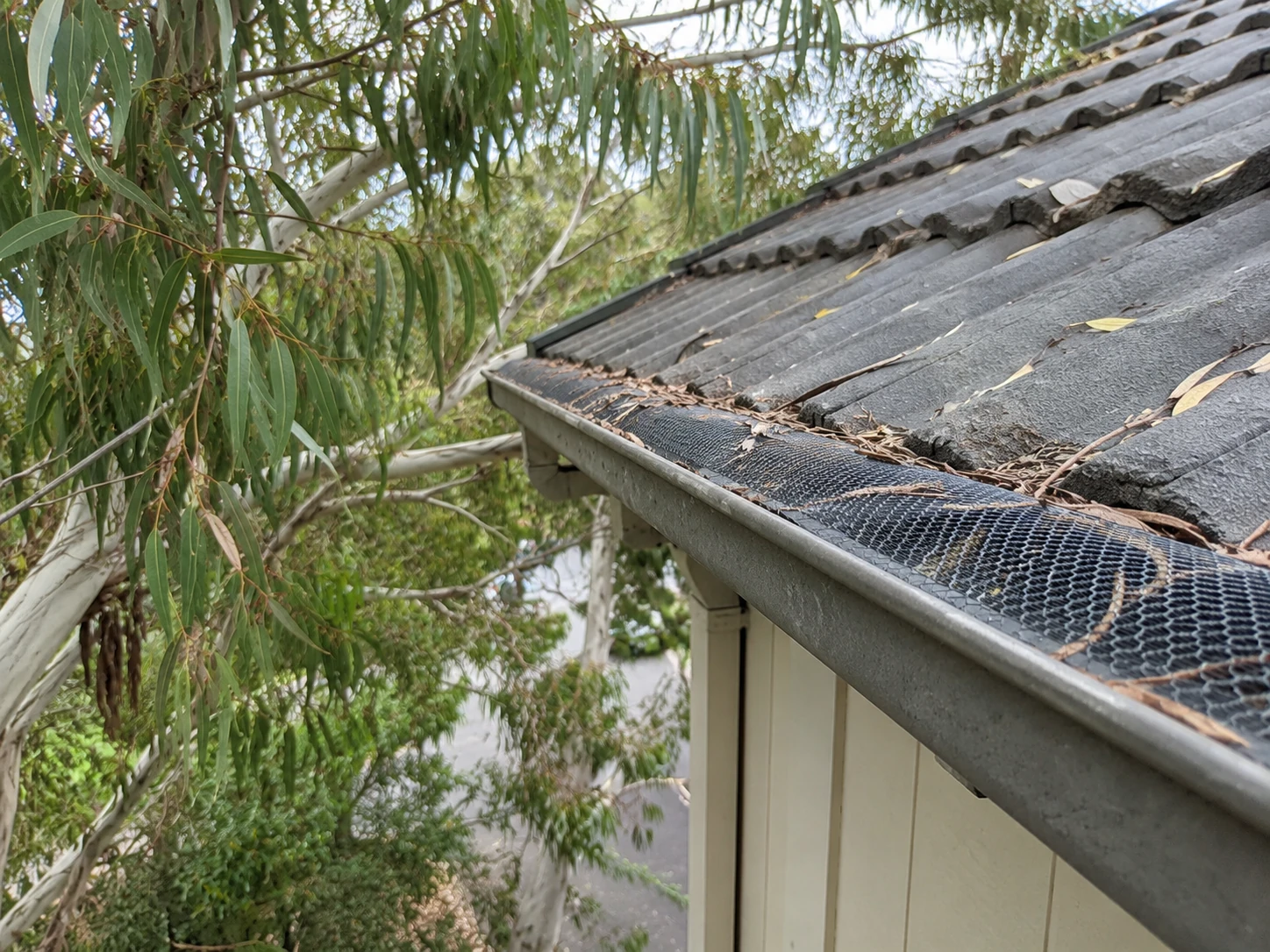
Any gutter run or valley beneath overhanging branches should be treated as a priority. Different tree species create different problems. Large deciduous trees may drop heavy seasonal leaf loads, while eucalypts and pines can shed leaves, needles, bark and fine debris throughout the year.
Focus attention on:
Even when branches do not physically touch the roof, seeds, blossoms, gum nuts and small twigs can still overwhelm unprotected gutters or basic mesh systems.
Roofs with multiple hips, dormers, step-downs or architectural features often create pockets where debris settles. On multi-level homes, upper roofs may discharge water and leaf litter onto lower roof sections, increasing the load on one small area.
Pay attention to:
These areas can look clear from ground level, but closer inspection may reveal built-up silt, leaves and fine organic matter.
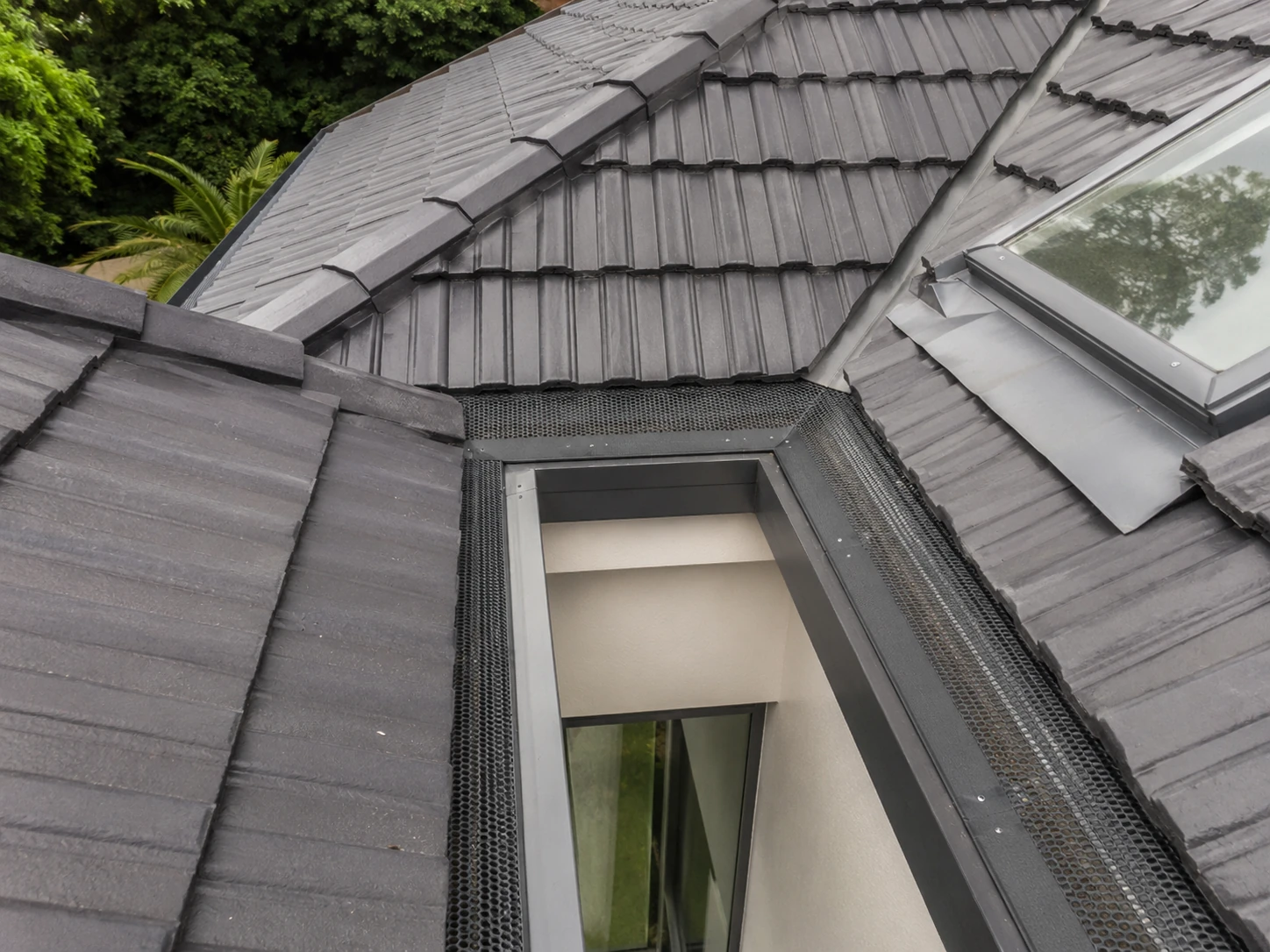
Roof valleys, box gutters and internal corners concentrate high volumes of water into relatively small areas. Any gutter guard used in these areas must handle faster water flow without causing overshoot, ponding or debris buildup.
The right solution depends on both debris control and drainage. A guard that blocks leaves but cannot handle fast-moving rainwater may still cause overflow.
Valleys act as water highways. On a steep or long roof, a valley can carry significantly more water than a standard straight gutter run. This means a basic guard that performs well along the gutter edge may struggle where two roof planes meet.
For valley areas, a gutter guard should:
A finer mesh may suit many standard gutter runs, while a more open or purpose-designed valley mesh may be needed along the valley itself. The mesh should be cut, folded and finished neatly so there are no raised edges that catch water or trap debris.
Box gutters require careful attention because they are recessed and often have fewer overflow paths. If leaves or silt restrict flow, water may back up into the roof space instead of spilling visibly over the outside gutter edge.
A suitable guard for box gutters should prioritise:
Overly fine or poorly tensioned mesh can behave like a dam if it becomes clogged with fine debris. In high-leaf areas, the gutter guard should work with correctly sized outlets and overflow provisions so heavy rain can be managed safely.
Internal corners and roof junctions can create turbulence in water flow. Wind may push water sideways, and small changes in flashing height can cause water to jump over the gutter line if the guard is not shaped correctly.
At internal corners, the guard should:
Custom folding of mesh, corner trays or diverter details may be needed in these areas. The aim is to direct water into the gutter while keeping leaf litter on top of the guard where it can dry, move and be cleared more easily.
The right gutter guard depends heavily on the roof material and profile. A system that performs well on a simple pitched metal roof may not suit a terracotta tile roof, low-pitch extension or roof with multiple intersecting sections.
Matching the guard type, mesh size and fixing method to the roof surface helps reduce the risk of leaks, corrosion, lifted tiles and water overshoot. It can also help avoid issues with roof warranties, as incorrect fixings or incompatible materials may affect coverage.
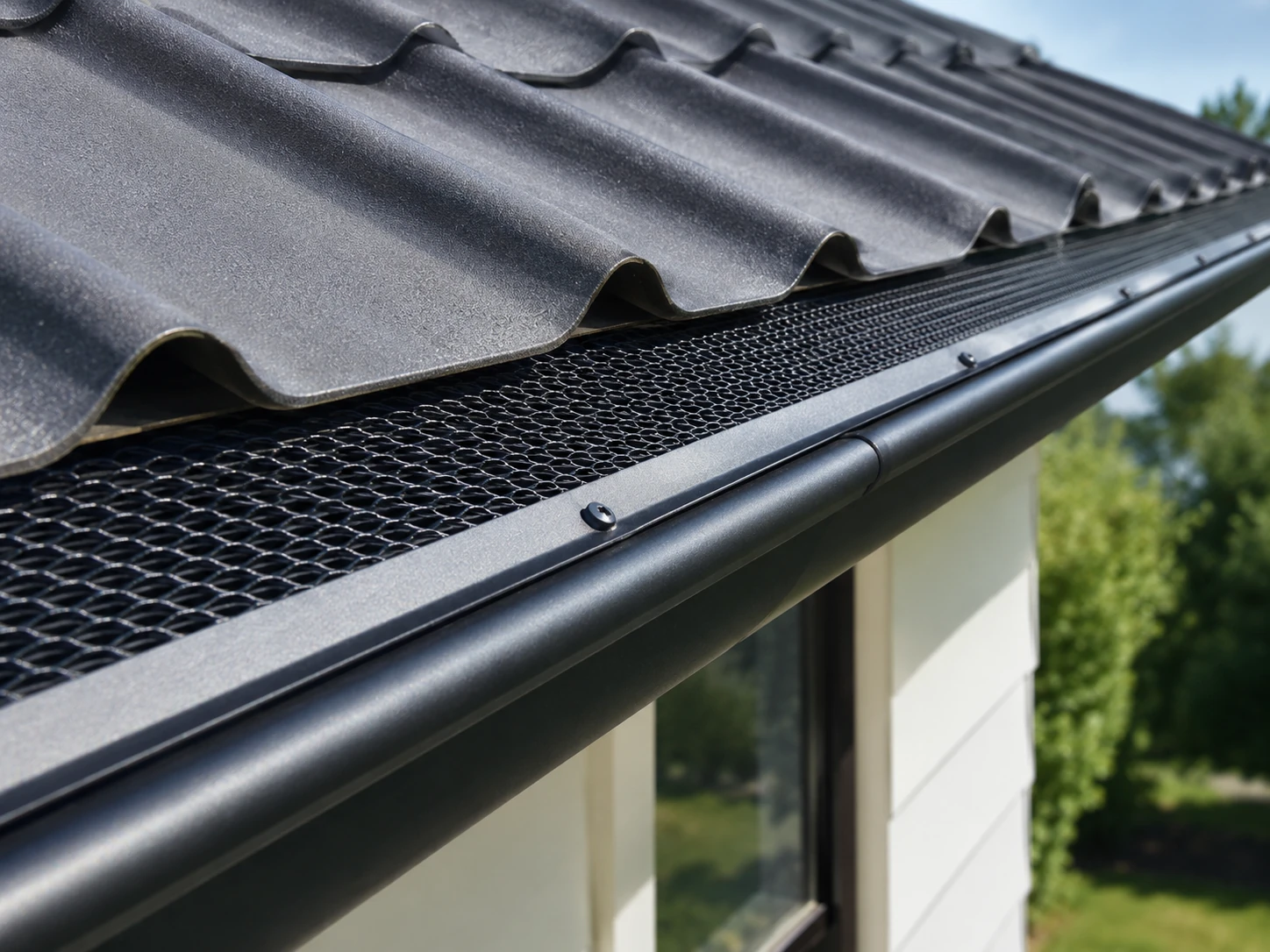
Metal roofs often work well with continuous mesh systems, provided the guard is fixed correctly to suit the roof profile. For valleys, mesh may need to run up each side of the valley and across the top to reduce leaf buildup without restricting water movement.
Colorbond and similar coated steel roofs should be paired with compatible mesh, screws and fittings. Dissimilar metals can increase the risk of galvanic corrosion, so material compatibility matters.
On steep metal roofs, water moves quickly. A low-profile fit that follows the roofline can help control fast-flowing water and reduce the chance of rainwater running over the gutter edge.
Tiled roofs require a different approach because tiles are not usually designed to be screwed through. A suitable gutter guard for tiled roofs generally sits beneath the second tile and is secured at the gutter edge, creating a smooth transition from roof to gutter.
The mesh needs to be flexible enough to follow the tile profile but strong enough to avoid sagging under debris. The installation should avoid lifting tiles too high, as this may create entry points for wind-driven rain.
In tiled roof valleys, leaves can build up quickly. A properly shaped valley mesh can allow water to run beneath the mesh while leaves remain on top. The mesh must be cut and finished carefully around tile edges to avoid damage to terracotta or concrete tiles.
Complex roof profiles, skylights, solar panels, parapet walls and box gutters often require a cut-to-fit mesh system. This allows the guard to be folded and shaped around tight angles and roof penetrations without leaving gaps.
Low-pitch roofs may need a guard that allows slower-moving water to drain freely while preventing fine debris from settling. Steeper roofs may need a closer-fitting guard that controls fast water movement and reduces overshoot.
Architectural roof features should be assessed carefully before installation. The more complex the roofline, the more important it becomes to use a system that can be adapted to each section.
Not every part of a roof behaves the same way. Valleys, low-slope areas, upper-storey gutters and long uninterrupted runs all experience different water volumes and debris loads. A single gutter guard type may not be ideal across the entire roof.
A more effective design may use different guard profiles or mesh sizes in different areas. For example, a valley carrying heavy water flow may need a more open or profiled guard, while a shaded rear gutter affected by fine organic matter may benefit from a finer mesh.
Access also matters. Difficult or unsafe roof areas should usually be prioritised for more durable, low-maintenance guards. More accessible areas may tolerate simpler solutions if they can be inspected and cleaned more easily.
The goal is not to install the same product everywhere. The goal is to match each roof zone to the level of water flow, debris exposure and maintenance access it actually receives.
Gutter guards in valleys and complex roof areas may also need to support bushfire protection and rainwater collection requirements. This is particularly important for properties in bushfire-prone areas or homes where roof water is collected in tanks.
Before choosing a product, homeowners should confirm the property’s bushfire requirements and whether the roof is connected to a rainwater harvesting system.
In bushfire-prone regions, gutter protection should be checked against the property’s Bushfire Attack Level and the relevant Australian Standard. Roof valleys are especially important because they can trap fine debris and embers.
For bushfire-rated sites, consider:
In many bushfire-rated applications, fine metal mesh with small apertures may be required. However, the correct product should always be confirmed against the property’s specific BAL rating and current requirements.
Where roof water feeds into tanks, the gutter guard should be suitable for rainwater collection. Valleys collect large volumes of fast-moving water, so both flow and water quality matter.
For rainwater systems, consider:
Flat inserts, foam products or poorly tensioned mesh may hold fine organic matter, which can break down and wash into tanks. A properly installed mesh system usually performs better because it allows debris to dry and be cleared more easily.
Before installing gutter guards in roof valleys or complex areas, it is worth confirming:
Checking these points early helps ensure the selected gutter guard suits the property, supports compliance requirements and avoids unnecessary issues with water flow, maintenance or rainwater quality.
Even well-installed gutter guards need occasional inspection and maintenance. Valleys, intersecting roofs and high-debris zones place extra pressure on guards, so a set-and-forget approach can still lead to blockages or overflow.
A simple maintenance plan helps protect the gutter system and the roof.
Roof valleys, box gutters and sections below large trees should be inspected more often than standard straight gutter runs. Seasonal leaf fall, storms and strong winds can all increase debris buildup.
As a general guide:
During inspections, look for leaf mats sitting on top of guards, debris caught at the leading edge of mesh, water staining on fascia or walls, and any signs that water has been overflowing.
Maintenance in difficult roof areas is mainly about keeping water pathways clear. Even guards designed for fine debris may still collect some silt, pollen, seed pods or pine needles over time.
Useful maintenance tasks include:
Where safe access is possible, a soft-bristle brush or low-pressure blower is usually enough for routine cleaning. High-pressure water should generally be avoided, as it may force debris into openings or distort mesh and fixings.
For steep roofs, multi-storey homes or difficult access areas, professional cleaning is usually the safest option.
Valleys and complex roof areas experience more water movement and wind exposure than standard gutter runs. Regularly checking fixings and alignment helps prevent small issues from becoming larger roof problems.
During each inspection:
Any sagging or poorly aligned section should be corrected promptly. Pooling water can accelerate corrosion, encourage sludge buildup and reduce the performance of the gutter guard. If the same area repeatedly blocks or overflows, the guard type or installation detail may need to be changed.
Choosing the right gutter guard for roof valleys and difficult roof areas requires more than selecting a product that keeps leaves out. Effective protection depends on understanding how water moves through valleys, box gutters, internal corners and high-flow sections of the roof.
A well-planned gutter protection system considers roof material, pitch, nearby trees, debris type, bushfire requirements, rainwater collection and maintenance access. By treating the roof as a whole instead of relying on a one-size-fits-all solution, homeowners can reduce blockages, improve drainage and protect vulnerable roof areas more effectively.
