
OPEN 7 DAYS
300+ 5
Reviews
LOW PRICES


CALL US NOW ON :
Gutters beneath overhanging trees often collect more leaves and twigs than other parts of a home, making them a natural starting point for gutter guard installation. Gutter Protection Solutions helps homeowners assess whether protecting selected gutter runs will address their main maintenance concerns or whether broader coverage would be more practical.
The right approach depends on debris exposure, gutter configuration and the condition of the existing drainage system. Wind can carry leaves beyond the nearest branches, while connected gutter runs may share downpipes that remain vulnerable to blockages. Understanding these factors can compare partial and whole-house coverage and choose a solution that suits your property.
Yes, partial gutter protection can be a practical option when a section receives more debris than the rest of the home. However, the decision should account for how each gutter run drains, whether other sections contribute debris to shared outlets and how much maintenance uncovered areas will still require.
Gutter layout and previous debris accumulation assessments provide a more reliable basis for deciding where coverage should begin and end.
Selective coverage is easiest to justify when one complete gutter run receives more leaves or twigs than the others and drains through its own outlet. For example, a gutter beneath a tree canopy might repeatedly accumulate debris while a separate run on the opposite side of the house remains clear between maintenance visits.

In this situation, protecting the troublesome run may reduce the main maintenance burden without requiring coverage across the entire roofline. Whole-house installation is not automatically necessary simply because one section is difficult to keep clear.
Existing gutter’s condition still matters. An installer should check for deterioration, inadequate falls, drainage problems and other issues that could affect performance before recommending a guard. Gutter protection should not be treated as a repair for an existing drainage fault, and any necessary repairs should be assessed by professionals.
When comparing services for gutter guard in Hobart, ask the supplier to identify the proposed coverage area, explain how the gutter drains and clarify which sections will remain uncovered. A useful recommendation should reflect the property's actual layout rather than assume that the gutter directly beneath a tree is the only area requiring attention.
The gutter directly beneath a tree is an obvious candidate for protection, but leaves do not always land there. Wind can carry them across the roof and deposit them along other edges. Fine debris can also accumulate in less visible areas, specifically where roof geometry or sheltered corners encourage material to settle.
Seasonal changes make a single inspection less conclusive. A gutter that appears clear during a quiet period may receive considerably more material when nearby trees shed leaves or winds arrive from another direction.
Previous maintenance provides useful evidence. Homeowners can tell the installer which sections need cleaning, when blockages tend to occur and whether different weather conditions make the problem worse. Observations made safely from ground level are helpful, while areas that cannot be inspected clearly should be assessed by an expert.
The suitability of the existing gutter system should also be considered before installation. The information about installing protection on existing gutters can help homeowners prepare questions about compatibility, gutter condition and any work required before guards are fitted.
Different sides of the same home can experience very different debris loads. In Hobart, wind can carry leaves beyond nearby tree canopies, while sheltered areas may allow material to settle and remain in place.
A suitable coverage plan should consider where debris enters the gutter system and how water and loose material move through its drainage paths. These factors help determine whether partial coverage will address the main problem or leave other vulnerable areas untreated.
An exposed roof edge may collect wind-carried leaves even when no branches hang directly above it. In contrast, a sheltered corner may retain debris because material settles there and is less likely to be blown away. These patterns can make the most troublesome gutter less obvious when viewed from the garden.
A property assessment should therefore consider roof orientation, nearby vegetation, exposed edges and the history of debris accumulation. A clear gutter on inspection day does not necessarily indicate low exposure throughout the year.
Homeowners who repeatedly clean one side after windy weather should share that information when discussing coverage. A separate run that has consistently remained clear may be a reasonable candidate to leave uncovered, provided its ongoing maintenance requirements are manageable.
For further context, Hobart's gutter challenges explain why local conditions and property-specific exposure matter when selecting a gutter guard system.
A gutter section may appear separate from another without functioning as an independent drainage unit. Several runs can connect around the house or discharge through a shared downpipe. Debris entering an uncovered section may still contribute to a blockage at an outlet used by a protected section, but it depends on the layout.
This does not mean every connected gutter must automatically receive a guard. However, protecting the area beneath a tree may not resolve the main drainage issue if other uncovered sections continue to contribute leaves and twigs to the same outlet.
Ask installers to identify which runs drain independently and which share downpipes. The assessment should distinguish a complete, independently draining run from a short section that remains connected to other gutters.
This distinction can also explain differences between quotes. One proposal might cover only the gutter beneath a tree, while another includes adjoining runs that feed the same outlet. Neither scope should be judged solely by the amount of coverage offered. The important question is if the proposed boundaries address the debris sources and drainage risks.
A marked-up photograph or simple roofline sketch can be used to clarify which sections will be protected, where the outlets are located and which areas will remain exposed.
Uncovered gutters retain their existing exposure to leaves, twigs and other debris. Installing guards elsewhere does not prevent material from entering these sections or remove their ongoing maintenance requirements.
Partial coverage can still be worthwhile when it targets a clearly defined problem area. The decision should account for the condition of the remaining gutters, the difficulty of accessing them for cleaning and whether future expansion would be practical.
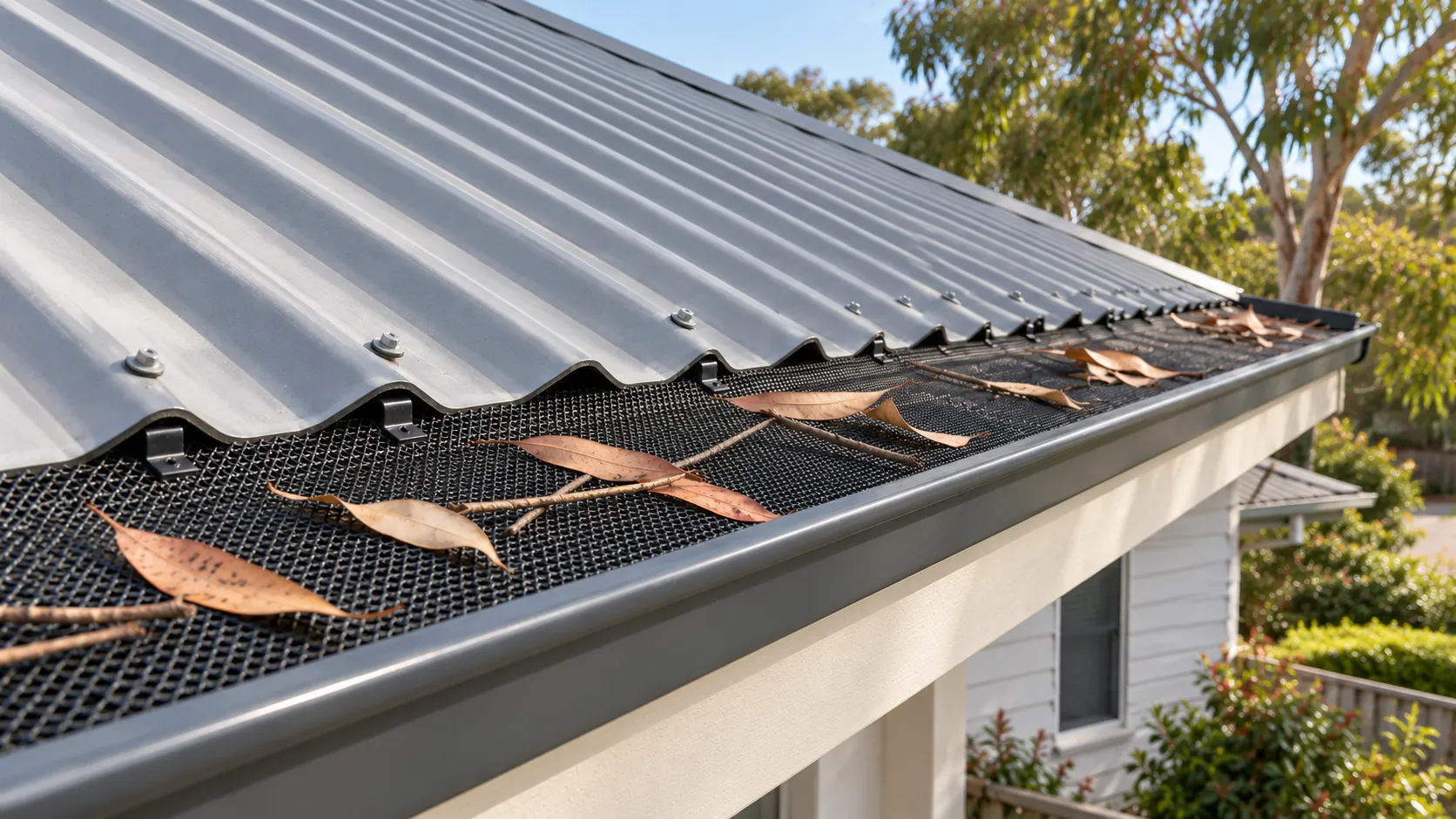
When one independently draining run receives gutter protection, the remaining sections continue operating as they did before. They may require less frequent attention because they receive less debris, but this depends on their individual exposure rather than any protective effect transferred from the covered area. Tasmania SES recommends keeping gutters and downpipes clear to help prevent blockages and damage to the home.
Homeowners should establish separate maintenance expectations for covered and uncovered sections. Gutter guards can reduce debris entering the gutter, but their performance depends on the system design, the type of debris present, the roof and gutter configuration and the quality of installation. Leaves and fine material can still accumulate on or enter some systems, so inspections and occasional cleaning may remain necessary.
Access is another consideration. Protecting one difficult-to-reach section may reduce maintenance demands, but leaving another hazardous or inaccessible run uncovered could preserve much of the original problem. The value of partial coverage must be assessed alongside the practical effort required to maintain the rest of the system.
The principles of ongoing gutter guard maintenance still apply when only part of a property is protected. Where safe access is unavailable, professional inspection and cleaning can help maintain the system without climbing onto the roof.
WorkSafe Tasmania provides guidance on managing risks when working at height, which is relevant to contractors assessing safe access for gutter inspection and maintenance.
Staged gutter guard installation can make sense when the immediate priority is a specific problem area or when broader coverage is being considered for a later date. However, the first stage should be planned around the gutter layout rather than stopped at an arbitrary point.
The installer should assess exposed ends, transitions and adjoining sections to ensure the covered area is finished and the uncovered gutters remain accessible for maintenance. The proposed scope should identify where coverage begins and ends, particularly when only part of a connected drainage system is being treated.
Homeowners planning to extend coverage later should discuss this before the initial installation. The supplier can assess whether the existing gutter condition, chosen guard system and proposed boundaries allow a practical extension or if some completed work may need alteration. Future compatibility should not be assumed without an assessment.
Partial coverage is worth considering when the main debris problem is concentrated in a defined area and the remaining gutters have manageable maintenance requirements. Broader coverage may be more practical when debris is widespread, several runs contribute to shared outlets or uncovered sections are difficult and costly to maintain.
Gutter Protection Solutions can assess both options against the property's roofline, drainage layout and debris exposure. Request a comparison that identifies the areas protected, the outlets and sections that remain vulnerable and the maintenance expected under each option. This makes it easier to weigh the initial scope against the ongoing work involved and choose coverage that suits the home's actual needs.
