
OPEN 7 DAYS
300+ 5
Reviews
LOW PRICES
.webp)

CALL US NOW ON :
Gutter guards are often promoted as a “set and forget” solution, particularly in Tasmania, where rain, strong winds and falling debris are regular parts of home ownership. It is easy to assume that once a guard system is installed, blocked gutters, overflowing water and frequent cleaning will no longer be concerns. In reality, gutter protection reduces maintenance rather than removing it completely. Understanding how gutter guards work can help homeowners set realistic expectations about debris control, water flow and ongoing maintenance.
Gutter Protection Solutions helps homeowners understand how different gutter guards perform in Tasmania’s varied conditions. The right system can substantially reduce leaf build-up, downpipe blockages and the need for full gutter cleaning, but its effectiveness will still depend on the roof design, surrounding vegetation, local exposure and quality of installation.
Understanding what gutter guards can and cannot do allows homeowners to set realistic expectations. It also helps them choose a system that suits the debris around their property and establish a practical inspection routine that keeps rainwater flowing correctly.
Gutter guards are frequently described as maintenance-free because they significantly reduce how much debris enters the gutter channel. Instead of filling the gutter, most leaves, twigs and larger organic material remain on top of the guard, where they can dry out, blow away or be removed more easily.
Compared with open gutters, a well-installed system can provide several practical benefits:
Some properties may move from several intensive gutter cleans each year to one or two lighter inspections and maintenance visits. However, this is not a guaranteed schedule. Homes surrounded by tall trees, exposed to strong winds or located in areas with heavy seasonal debris may require more frequent attention.
The term “maintenance-free” should therefore be understood as a marketing description of convenience rather than a promise that no future work will be necessary.
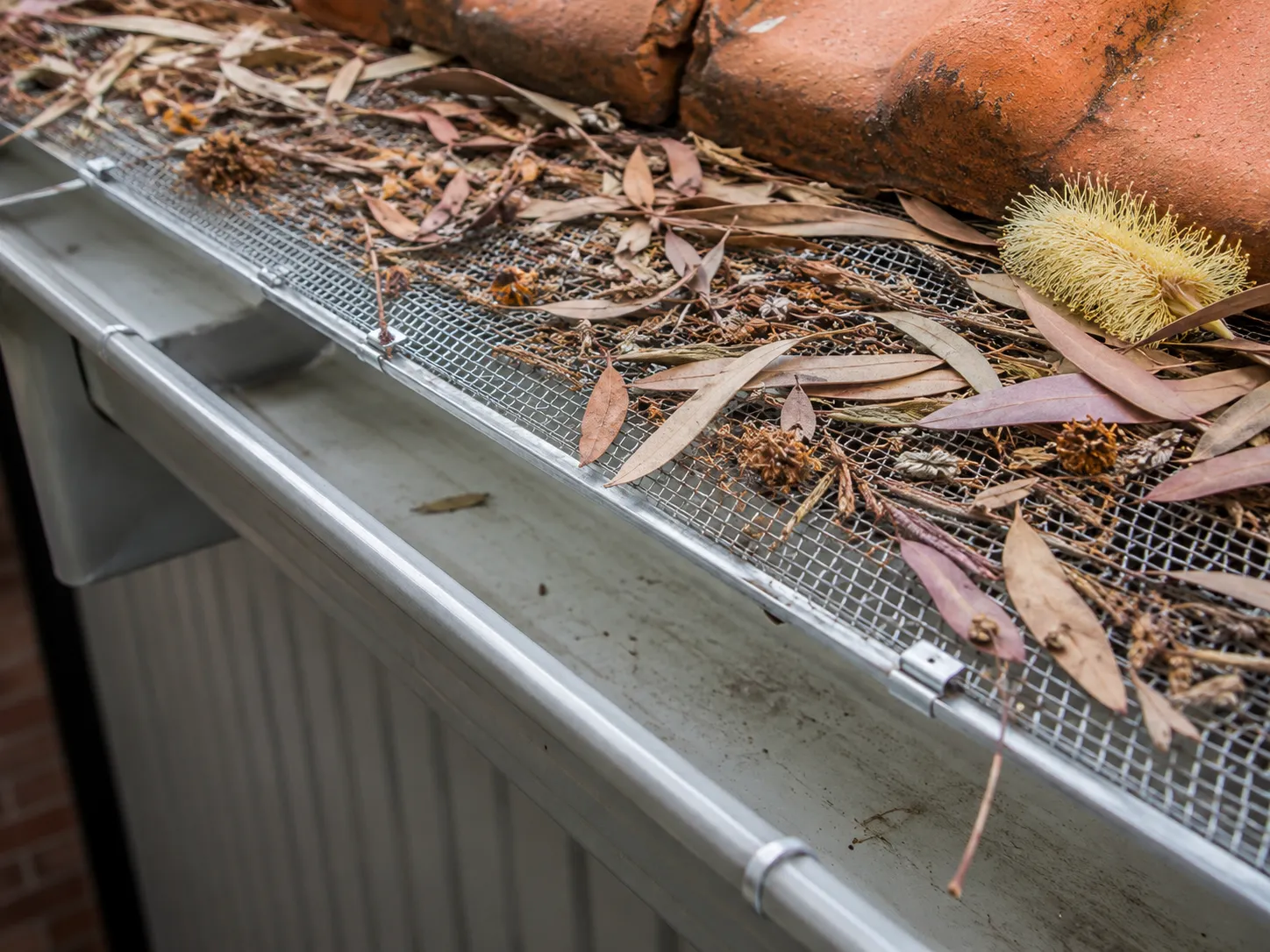
The main purpose of gutter protection is to limit the amount of solid material entering the roof drainage system. When the product is suited to the property and installed correctly, it can reduce several common gutter problems.
Leaves, bark, twigs and seed pods can quickly fill open gutters, particularly around mature eucalypts, pines and deciduous trees. A quality mesh or screen prevents most larger debris from entering the gutter channel.
Material that remains on top of the guard is generally easier to inspect and remove than dense, wet debris packed inside an open gutter. This changes maintenance from scooping out heavy sludge to periodically clearing lighter material from the guard surface, valleys and roof junctions.
Fine particles can still pass through some products or settle beneath the mesh over time. These may include:
The amount that enters will depend on the size of the mesh openings, roof pitch, gutter fall and type of vegetation surrounding the property.
Gutter guards can reduce the likelihood of leaves and twigs reaching narrow outlets, downpipes and stormwater connections. These areas are common blockage points because even a small amount of debris can restrict water flow during heavy rain.
Reducing the volume of solid material entering the system can help prevent water from:
Guards cannot prevent every blockage. Fine organic matter, roof grit and sediment may still move through the system, which is why outlets and downpipes should remain part of any inspection routine.
Covering an open gutter can make it more difficult for birds to build nests inside the channel. Securely fitted guards may also help limit access points used by rodents and other small animals near roof edges.
However, poorly secured mesh, loose end caps and gaps around corners can still provide opportunities for pests. Birds may also place nesting material on top of the guard or attempt to lift unsecured sections.
Signs of pest activity should be investigated promptly, particularly if material is collecting around valleys, downpipe entries or roof junctions.
Wet leaf sludge sitting inside a metal gutter holds moisture against the surface and may contribute to premature corrosion. By reducing how much organic material remains inside the channel, gutter guards can help gutters dry more efficiently.
This benefit depends on the system continuing to drain properly. Fine debris trapped beneath a guard can still retain moisture, especially in shaded areas. Periodic inspection is therefore important even when the top of the mesh appears clear.
In bushfire-prone areas, an appropriately selected non-combustible metal mesh system may help reduce the amount of dry leaf litter entering gutters. This can support broader efforts to limit combustible material around the roofline.
Not every guard provides the same level of protection. Plastic inserts, wide-opening products and incorrectly fitted mesh may not be suitable for properties exposed to bushfire risk. Product material, aperture size, roof design and installation details should all be considered.
Gutter protection should also be treated as only one part of a wider bushfire-preparation plan. It does not remove the need to manage surrounding vegetation, clear accumulated debris and follow current advice relevant to the property’s location.
Tasmania’s combination of wind, rain, native vegetation, coastal exposure and cool shaded conditions can affect how gutter guards perform. These factors make occasional inspection necessary even when a high-quality system has been installed. Understanding why some gutter guards fail in Tasmania can help homeowners avoid unsuitable materials, poor water-flow design and installation problems.
Strong winds can carry small leaves, needles, blossom, dust and roof grit onto the guard surface. In exposed coastal, rural and hilltop locations, fine material may be driven into gaps that larger leaves cannot enter.
During dry periods, this material can accumulate rather than wash away. Once wet, it may bind together and form a layer that slows water entry through the mesh.
Heavy rainfall can then expose restricted sections of the system. Water may overshoot the gutter, run across compacted debris or overflow at low points and blocked outlets.
Occasional clearing and, where appropriate, professional flushing help prevent fine material from developing into a larger drainage problem.
Many Tasmanian properties are surrounded by eucalypts, pines, stringybarks and other vegetation that drops material at different times of the year.
Eucalypts may release:
Pines can create problems because narrow needles may pass through larger openings or become lodged across the mesh. Deciduous trees can also release a large volume of leaves over a relatively short autumn period.
A system that performs well in an open suburban area may need more frequent attention on a bush-adjacent property or beneath overhanging trees. The surrounding vegetation should therefore influence both product selection and the inspection schedule.
Cool, damp and shaded roof areas can encourage moss, lichen and algae growth. Organic growth may establish on roofing materials, around gutter edges or across sections of fine mesh.
Over time, it can:
Shaded sections of the roof may need more attention than sunny, exposed areas, even when both are fitted with the same product.
Birds and small animals may disturb gutter protection while attempting to nest or access the roof cavity. Loose sections, shifted end caps and gaps around junctions should be addressed before debris begins entering beneath the guard.
Roofs and gutters can also move over time. Older fascia boards may deteriorate, brackets can loosen and gutters may begin to sag. This can change the angle of the installed guard and create low points where water and debris collect.
Minor movement should be corrected early. Leaving a sagging gutter or lifted section of mesh unattended may eventually lead to overflow, corrosion or water entering vulnerable areas of the building.
There is no single inspection schedule that suits every Tasmanian property. The appropriate frequency depends on:
For many homes, checking the system at least twice a year provides a sensible starting point. Properties beneath dense vegetation or in highly exposed locations may benefit from quarterly checks.
Autumn is an important time to inspect gutter guards, particularly around deciduous trees. Clearing early leaf fall prevents material from compacting, decomposing and becoming trapped around valleys or outlets.
Homes surrounded by eucalypts and other native trees may not experience one predictable leaf-drop period, so local conditions should guide the timing.
A spring inspection can identify debris left by winter weather, displaced mesh and organic growth that developed during cool, damp conditions.
This is also a useful time to confirm that:
Additional checks should be completed after severe weather. Strong winds may place branches, bark and other debris across the roofline, while heavy rain may reveal previously unnoticed restrictions. The Tasmania State Emergency Service recommends that homeowners regularly clean gutters, downpipes and drains to help prevent blockages and damage during storms.
Warning signs after a storm include:
A ground-level inspection may identify obvious issues, but a professional should assess areas that cannot be viewed safely.
Gutter guards should be inspected after work involving solar panels, antennas, roofing, flashing or roof-mounted equipment. Trades may need to lift or alter sections of mesh to complete their work.
Offcuts, screws and other small materials can also remain on the roof and catch debris. Any disturbed gutter protection should be reinstated correctly once the work is complete.
Inspection frequency may need to increase when:
Maintenance should reflect current site conditions rather than following the same schedule indefinitely.
Most developing problems create visible warning signs before major damage occurs. Homeowners should watch for changes around the roofline and exterior of the property, particularly during or shortly after rain.

Water spilling over the front of a gutter usually indicates that flow is being restricted. Possible causes include:
Overflow that occurs repeatedly in the same location should be assessed rather than dismissed as a result of heavy rain.
Dark streaks, water marks, peeling paint or discolouration beneath the gutter can indicate recurring overflow. If left unaddressed, ongoing moisture may damage coatings, timber fascia boards and exterior finishes.
Staining around one section may help identify the location of a blockage or low point.
A gutter that bows, dips or pulls away from the fascia may be holding water and debris or may have damaged brackets. Mesh can also sag when wet organic matter accumulates on top of it.
Lifted, warped or loose sections should be repaired promptly because they can allow debris, birds and pests to enter underneath.
Moss, grass or other vegetation growing through a guard is a strong indication that moisture and organic matter have been collecting for an extended period.
The visible growth may only represent part of the problem. Sediment beneath the mesh and inside the gutter may also need to be removed.
Possible signs of roof drainage problems inside the property include:
These signs warrant prompt professional investigation. Water entry may be related to blocked gutters, but roofing defects, flashing problems and other building issues may also be involved.
Persistent water near exterior walls, paths, garden beds or beneath decks may indicate that the roof drainage system is not directing water away effectively.
The problem may involve the gutter, downpipe or underground stormwater connection. Gutters and guards should therefore be assessed as part of the complete drainage system rather than in isolation.
Gutter and roof work can involve serious fall risks. Wet surfaces, steep roof pitches, uneven ground and overhead hazards can make even a simple cleaning task dangerous. Homeowners should consider the risks associated with falls and working at height before attempting to access gutters or roof surfaces.
Homeowners can complete basic visual checks from ground level using binoculars or another safe viewing position. They should avoid climbing onto the roof or working from a ladder unless they have the appropriate equipment, experience and safe conditions.
Professional assistance is recommended when:
A professional can inspect the mesh, fixings, gutter fall, outlets and surrounding roof areas without encouraging unsafe access.
Maintenance requirements begin with product selection. A system should be chosen according to the property rather than relying solely on broad claims about performance. Homeowners should compare different gutter guard systems according to their roof type, surrounding vegetation and local exposure rather than choosing on price alone.
Important considerations include:
Fine metal mesh may be appropriate where small leaves, needles and ember exposure are concerns. Other systems may perform adequately in areas with lighter vegetation and larger leaf debris.
Regardless of product type, poor installation can undermine performance. Gaps, loose edges, insufficient fixing and incorrect alignment may allow debris underneath or cause water to flow over the gutter rather than through the mesh.
A properly selected and installed system should reduce cleaning demands while still allowing the roof drainage system to be inspected and maintained when necessary.
Gutter guards can substantially reduce leaf accumulation, downpipe blockages and the need for frequent full gutter cleaning. They can also make ongoing care faster and more manageable by keeping most larger debris on top of the guard rather than inside the gutter.
However, Tasmania’s strong winds, rainfall, native vegetation, moss and fine airborne debris mean that no system should be ignored indefinitely. Seasonal inspections and additional checks after storms, roof work or changes in surrounding vegetation help identify problems before they cause overflow or water damage.
The most effective approach is to choose a durable system suited to the property and treat it as a low-maintenance investment rather than a completely maintenance-free product. Gutter Protection Solutions can assess the roof, gutter design and surrounding environment before recommending an appropriate system. With professional installation and sensible ongoing care, gutter guards can support reliable drainage, reduce cleaning demands and help protect the roofline and surrounding property over the long term.
